
Red Sea Global
Across the western coastline of Saudi Arabia, one of the most ambitious tourism developments in the world is taking shape. Led by Red Sea Global, the Red Sea destination is attempting something rarely achieved in large-scale tourism: building a luxury travel destination while protecting — and even restoring — the surrounding environment.
Rather than treating sustainability as a feature layered onto development, the project places environmental stewardship at the centre of the entire vision. The result is a new model for tourism development where nature, innovation and hospitality are designed to work together from the outset.
A Vast Natural Landscape, Carefully Protected
The Red Sea destination stretches across approximately 28,000 square kilometres of pristine coastline, islands, deserts and mountain landscapes along the Red Sea. More than 90 islands, many previously untouched by development, form part of the wider project.
Despite the scale of the destination, protection of the natural environment has been a core priority. Before construction began, extensive environmental studies were carried out to map coral reefs, wildlife habitats and sensitive ecosystems.
To safeguard the region:
- Large areas of land and sea are designated as conservation zones
- Development is limited to a small portion of the overall site
- Visitor numbers will be capped at around one million per year
By limiting the physical footprint of tourism, the aim is to protect the fragile ecosystems that make the destination so unique.
Moving Beyond Sustainability to Regenerative Tourism
A defining principle of the Red Sea development is its commitment to regenerative tourism.
While many tourism projects aim to minimise environmental damage, regenerative tourism goes a step further: it seeks to actively improve the natural environment over time.
Red Sea Global has set an ambitious target of delivering a 30% net conservation benefit by 2040. This means the environment surrounding the destination should be measurably healthier and more biodiverse than it was before development began.
Initiatives include:
- Restoration of mangrove forests and coastal habitats
- Protection and monitoring of coral reef systems
- Reintroduction of native plant species
- Long-term biodiversity research programmes
In effect, the destination is being developed not just alongside nature, but in partnership with it.
Building a Destination Powered by Renewable Energy
Perhaps one of the most remarkable aspects of the project is its infrastructure. The entire destination is designed to operate on 100% renewable energy, powered by one of the world’s largest off-grid solar power systems.
A network of solar farms generates energy during the day, while large-scale battery storage ensures the destination can continue running on clean energy overnight.
The sustainability infrastructure also includes:
- One of the region’s largest electric vehicle charging networks
- A fully electric transport fleet across the destination
- Smart grid technology to manage energy demand efficiently
- This approach removes the need for traditional fossil-fuel power sources, significantly reducing the carbon footprint of the destination from the start.
Protecting the Red Sea’s Unique Marine Ecosystem
The waters surrounding the Red Sea destination are home to some of the most resilient coral reefs in the world, capable of withstanding higher temperatures than many other reef systems.
Protecting this ecosystem has been central to the development strategy.
Marine protection measures include:
- Establishing large marine protected areas
- Limiting coastal construction near sensitive reefs
- Implementing coral monitoring and restoration programmes
- Supporting marine research initiatives
By safeguarding the surrounding marine environment, the destination hopes to preserve one of the planet’s most valuable and vulnerable ecosystems.
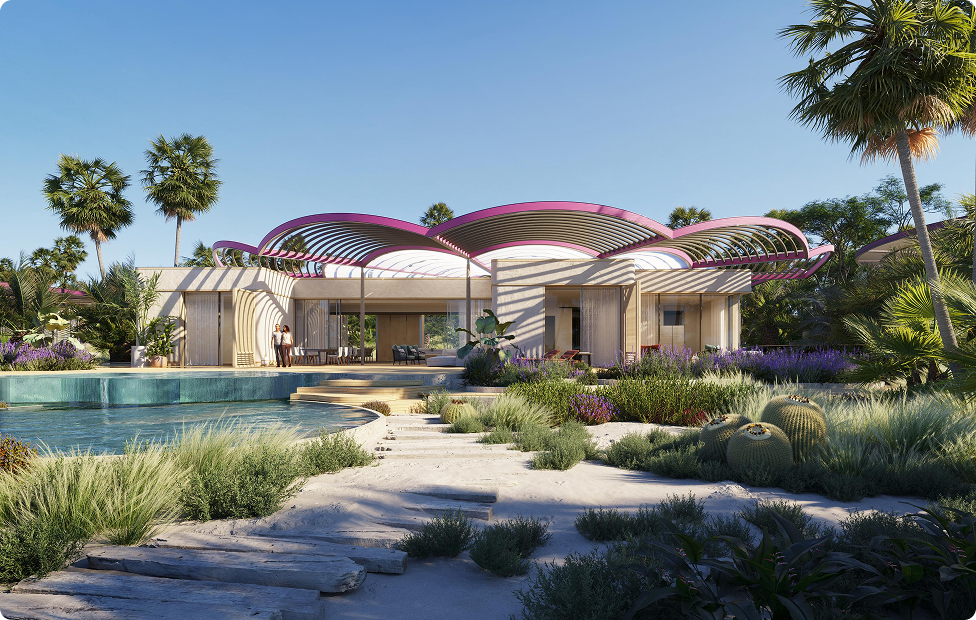
Designing with the Landscape
Architecture and planning across the destination have been designed to integrate with the surrounding landscape rather than dominate it.
Buildings are carefully positioned to reduce environmental disruption, while materials and construction techniques aim to minimise ecological impact. Water management, waste reduction and efficient cooling systems are also integrated across the development.
In a region where natural resources are scarce, innovation in water conservation, desalination and reuse is essential to maintaining environmental balance.
A Blueprint for the Future of Tourism
Large tourism developments have historically come with significant environmental cost. The Red Sea project represents an attempt to challenge that narrative.
By embedding renewable energy, conservation and regenerative principles into every stage of development, Red Sea Global is testing whether tourism can evolve into a force for environmental restoration rather than degradation.
If successful, the destination could provide a blueprint for how future tourism developments are planned around the world.
In an era where travellers, investors and governments are increasingly focused on sustainability, the Red Sea project demonstrates that environmental ambition and luxury tourism no longer need to be at odds — they may in fact be inseparable.
↑ Back to top